
 EN
 FR
 中文
 ES
 PT
 عربي
Should My Child Compete in BJJ?
Your child comes home from class talking about a tournament. They're excited. You're terrified. That's completely normal.
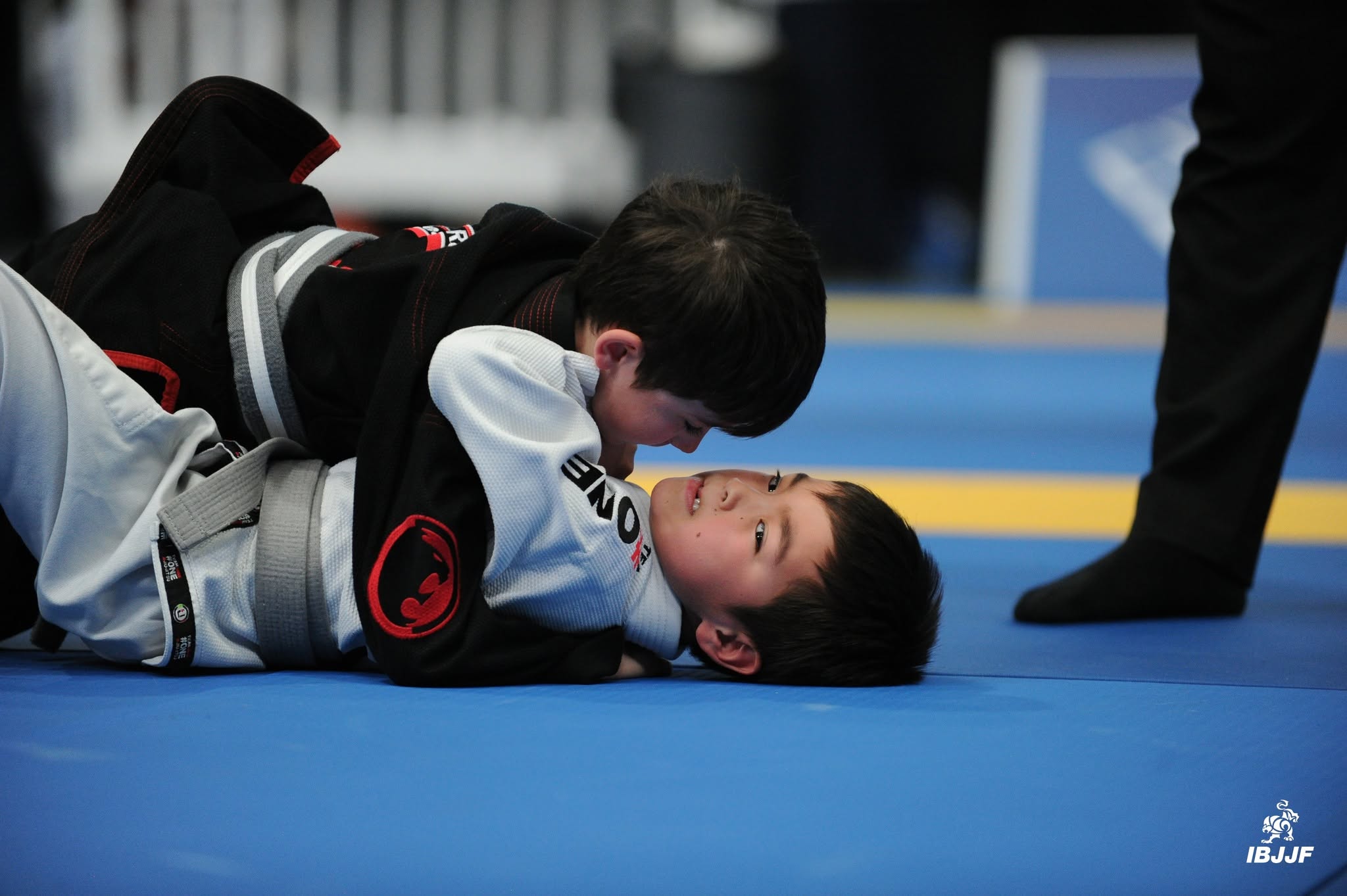
Here's what most parents don't realize: kids BJJ competitions are nothing like what you see in movies. There's no striking, no kicking, no dramatic knockouts. A kids jiu-jitsu match looks more like a supervised wrestling session with clear rules, attentive referees, and coaches right there on the mat edge.
Competition is optional at Gracie Laval. Not every child wants to compete, and that's perfectly fine. But for those who do, tournaments offer something the regular class environment can't - the experience of performing under pressure, managing nerves, and discovering what they're truly capable of.
The benefits go beyond the mat. Kids who compete in BJJ develop resilience, composure, and confidence that carries into school presentations, social situations, and everything else life throws at them. They learn that butterflies in the stomach are normal, that preparation matters, and that the outcome of a single match doesn't define who they are.
Competition isn't about winning trophies. It's about your child discovering they can handle something difficult.
What Age Can Kids Start Competing?
At IBJJF events, children can compete from age 4 in the Mighty-Mite division. That sounds young, but these matches are extremely gentle - they last 2 minutes, and the youngest divisions have significant restrictions on what techniques are allowed.
Children are matched by age, gender, belt and weight. This means your child will face someone very close to their own size, experience, and development stage. A 6-year-old will not face a 10-year-old with three years of training.
At Gracie Laval, we typically recommend that children have at least 6 months of consistent training before entering their first competition. This gives them enough time to understand basic positions, learn how to move safely, and build the confidence that comes from knowing what they're doing on the mat.
That said, every child is different. Some are ready at 4 months. Some prefer to wait a full year. Coach Louis-Philippe will give you an honest assessment of your child's readiness - there's never any pressure to compete before they're comfortable.
How Do Kids BJJ Matches Work?
A typical kids BJJ match follows this format:
- Match duration: Mighty Mite: 2 minutes, Pee Wee: 3 minutes, Junior: 4 minutes, Teen: 4 minutes
- Scoring: Points are awarded for takedowns (2 pts), sweeps (2 pts), knee on belly (2 pts), guard pass (3 pts), mount (4 pts), and back control (4 pts)
- Submissions: Allowed, but IBJJF bans many of them until age 16. Children 4 to 12 follow one list, and teens 13 to 15 follow almost the same list
- No leg locks: Leg submissions are prohibited in all kids divisions
- Coach or parent: In Mighty-Mite and Pee-Wee divisions, one companion, either a coach or a parent, may go into the competition area with your child
- Parents watch: You'll be in the spectator area with full visibility of the match
The referee stops the match immediately if anything looks unsafe, and your child can stop it at any time by tapping or saying they want to stop.
Here's what surprised most parents at their first tournament: it's actually fun. The atmosphere is supportive, other parents cheer for all the kids, and the children themselves are usually grinning before and after their matches - regardless of the result.
What IBJJF Divisions Are There for Kids?
The IBJJF places every child by birth year, not birthday: subtract the birth year from the competition year. A child born in 2018 competes as Pee-Wee 2 for all of 2026. Other organisers can count differently: Grappling Industries uses your child's exact age on the day of the event. The IBJJF age groups are:
Age divisions (2026)
| Division | Age in 2026 | Born in | Match |
|---|---|---|---|
| Mighty-Mite ages 4 to 6 | |||
| Mighty-Mite 1 | 4 | 2022 | 2 min |
| Mighty-Mite 2 | 5 | 2021 | 2 min |
| Mighty-Mite 3 | 6 | 2020 | 2 min |
| Pee-Wee ages 7 to 9 | |||
| Pee-Wee 1 | 7 | 2019 | 3 min |
| Pee-Wee 2 | 8 | 2018 | 3 min |
| Pee-Wee 3 | 9 | 2017 | 3 min |
| Junior ages 10 to 12 | |||
| Junior 1 | 10 | 2016 | 4 min |
| Junior 2 | 11 | 2015 | 4 min |
| Junior 3 | 12 | 2014 | 4 min |
| Teen ages 13 to 15 | |||
| Teen 1 | 13 | 2013 | 4 min |
| Teen 2 | 14 | 2012 | 4 min |
| Teen 3 | 15 | 2011 | 4 min |
| Juvenile ages 16 to 17 | |||
| Juvenile 1 | 16 | 2010 | 5 min |
| Juvenile 2 | 17 | 2009 | 5 min |
Age = 2026 minus the birth year, so the year counts, not the birthday. The birth years move up by one every January. Juvenile 1 and 2 compete at adult IBJJF events, not at kids events.
Within each age sub-division, competitors are further separated by belt color and weight class. This creates brackets where your child faces opponents as similar to them as possible.
Kids belts (ages 4 to 15)
| Belt group | Belts in the group | Allowed ages |
|---|---|---|
| White | White | Any age |
| Grey | Grey and white, grey, grey and black | 4 to 15Mighty-Mite 1 to Teen 3 |
| Yellow | Yellow and white, yellow, yellow and black | 7 to 15Pee-Wee 1 to Teen 3 |
| Orange | Orange and white, orange, orange and black | 10 to 15Junior 1 to Teen 3 |
| Green | Green and white, green, green and black | 13 to 15Teen 1 to Teen 3 |
IBJJF kids events list their belt divisions by colour group: grey, yellow, orange and green. For white belts, check the event page. The year a child turns 16 (Juvenile 1), they move to the adult belts: a white belt can stay white, grey, yellow and orange become blue, and green becomes blue or purple, as the professor decides.
Weight classes (2026)
Maximum weight in pounds, weighed in a single weave gi (IBJJF 2026 kids weight list). Each column is one age division (1, 2 or 3) with its birth year. 1 kg = 2.2 lb.
| Weight class | 12022 | 22021 | 32020 |
|---|---|---|---|
| Rooster | 26 | 32.6 | 39.6 |
| Light Feather | 32.6 | 39.6 | 42 |
| Feather | 40 | 44.6 | 48.6 |
| Light | 46.6 | 53 | 55.6 |
| Middle | 53 | 57.6 | 62 |
| Medium Heavy | 60 | 64 | 69 |
| Heavy | 66.6 | 71 | 75.6 |
| Super Heavy | 73 | 77.6 | 82.6 |
| Ultra Heavy | No limit | No limit | No limit |
| Weight class | 12019 | 22018 | 32017 |
|---|---|---|---|
| Rooster | 40 | 46.6 | 53 |
| Light Feather | 46.6 | 53 | 60 |
| Feather | 53 | 60 | 67 |
| Light | 60 | 67 | 73.6 |
| Middle | 67 | 73.6 | 80 |
| Medium Heavy | 73.6 | 80 | 87 |
| Heavy | 80 | 87 | 93.6 |
| Super Heavy | 87 | 93.6 | 100 |
| Ultra Heavy | No limit | No limit | No limit |
| Weight class | 12016 | 22015 | 32014 |
|---|---|---|---|
| Rooster | 60 | 67 | 71 |
| Light Feather | 67 | 73.6 | 80 |
| Feather | 73.6 | 80 | 89 |
| Light | 80 | 87 | 98 |
| Middle | 87 | 93.6 | 106.6 |
| Medium Heavy | 93.6 | 100 | 116 |
| Heavy | 100 | 106.6 | 125 |
| Super Heavy | 106.6 | 114 | 133.6 |
| Ultra Heavy | No limit | No limit | No limit |
| Weight class | 12013 | 22012 | 32011 |
|---|---|---|---|
| Rooster | 80 | 89 | 98 |
| Light Feather | 89 | 98 | 106.6 |
| Feather | 98 | 106.6 | 116 |
| Light | 106.6 | 116 | 125 |
| Middle | 116 | 125 | 133.6 |
| Medium Heavy | 125 | 133.6 | 143.6 |
| Heavy | 133.6 | 143.6 | 152.6 |
| Super Heavy | 143.6 | 152.6 | 161 |
| Ultra Heavy | No limit | No limit | No limit |
| Weight class | Boys | Girls |
|---|---|---|
| Rooster | 53.5 kg118 lb | 44.3 kg98 lb |
| Light Feather | 58.5 kg129 lb | 48.3 kg106.6 lb |
| Feather | 64 kg141.6 lb | 52.5 kg116 lb |
| Light | 69 kg152.6 lb | 56.5 kg125 lb |
| Middle | 74 kg163.6 lb | 60.5 kg133.6 lb |
| Medium Heavy | 79.3 kg175 lb | 65 kg143.6 lb |
| Heavy | 84.3 kg186 lb | 69 kg152 lb |
| Super Heavy | 89.3 kg197 lb | No limit |
| Ultra Heavy | No limit | — |
| Open class | See the event | See the event |
Under IBJJF rules, children aged 4 to 12 all follow the same list of banned techniques, and teens aged 13 to 15 follow almost the same list. Leg locks of every kind, wrist locks, neck cranks, the guillotine, the Ezekiel choke, the arm triangle, the omoplata and pulling the head in a triangle are all banned up to age 15; most of these become legal at 16.
Kids BJJ Program (Ages 3-13)
Apprentice, Junior, and Teens classes. First class free.
Explore Kids ProgramHow Do I Prepare My Child for Their First Tournament?
Preparation is the single biggest factor in your child's competition experience. Here's a practical timeline:
6-8 Weeks Before
- Tell Coach Louis-Philippe your child wants to compete. This is the most important step. Once the coaching team knows, they'll adjust drilling to include competition-relevant scenarios.
- Register early. Prices go up at each registration deadline.
4-6 Weeks Before
- Focus on fundamentals. The basics win kids tournaments - takedowns, guard passes, and one or two reliable submissions.
- Practice match simulations during class. Your child should experience starting from standing, playing under time pressure, and hearing a coach give instructions during rolling.
2 Weeks Before
- Confirm weight class. Weigh your child in their gi to make sure they're in the right division.
- Do a rules review together. Watch a few kids BJJ matches on YouTube so your child knows what the referee's signals mean.
Mental Preparation
- Frame it positively. Say "This is a chance to try your moves against someone from a different gym" rather than "You need to win."
- Normalize nerves. Tell them every single person at the tournament - including black belt adults - feels nervous before competing. Butterflies mean they care.
- Focus on effort, not outcomes. "I'm proud of you for stepping on the mat" matters more than any medal.
The night before, keep it light. No cramming techniques, no pressure. A good meal, a good sleep, and a reminder that you're proud of them regardless of what happens.
What Should I Pack for a Kids Tournament?
Tournament day runs smoother with preparation. Here's the essential packing list:
- 2 gis - one to compete in, one backup (gis get sweaty or can fail uniform inspection)
- Rash guard - required for no-gi divisions. Under the gi, girls must wear a fitted rash guard; boys are not allowed to wear a shirt under the gi at IBJJF events
- Flip flops or sandals - mandatory for walking off the mat area (hygiene rules)
- Water bottle - hydration is important, especially in warm venues
- Snacks - check the event page first: IBJJF event pages say outside food is not permitted inside the venue
- IBJJF membership card - if competing in IBJJF events, your child needs an active membership
- Hair ties - for kids with longer hair (no clips or hard accessories allowed)
- Entertainment - a book, tablet, or cards for the waiting time between matches
- Small towel - for wiping down between matches
- Positive attitude - this is the most important item on the list
Your child must be inside the venue and in the athletes' waiting area (bullpen) at least one hour before the division's estimated start time; IBJJF requires it, and it leaves plenty of time for warm-up without rushing.
Looking for a tournament? Our competitions page lists upcoming events near Laval and beyond, updated every day.
How Much Does a Kids Tournament Cost?
Here's a realistic breakdown of tournament costs:
- Registration fee: about USD 119 to 133 per division at IBJJF kids events (Boston and Las Vegas 2026; gi and no-gi are separate divisions)
- IBJJF membership: from USD 30 per year for a minor, set up through a parent's IBJJF account and valid for one year; it must still be active on the last day of the event
- Travel: Variable depending on location - most Quebec events are within driving distance of Laval
- Accommodation: Only needed for out-of-province events
Registering before the first deadline saves about USD 14 per division at IBJJF kids events. If your child wants to do both gi and no-gi at the same IBJJF event, look for the combo price (Las Vegas Kids 2026: USD 203 early for both, versus USD 119 for one).
At Gracie Laval, we coordinate group registrations for team events, and we help with carpool arrangements for tournaments that require travel.
Competition is an investment, but it doesn't have to be expensive. Starting with one local tournament is a smart approach - you'll quickly learn what works for your family before committing to a full competition season.
Win or Learn - There's No Losing
Here's the truth about kids BJJ competition that experienced parents already know: the result of the match is the least important part of the experience.
Your child will either win and feel the reward of preparation paying off, or they'll face a challenge and learn something no classroom can teach - how to handle disappointment with grace, how to shake hands with the person who just beat them, and how to get back on the mat tomorrow with more determination than before.
The kids who compete regularly at Gracie Laval develop a mindset that serves them for life. They learn that losing a match doesn't mean they failed - it means they found out exactly what they need to work on next. That's not a cliche. It's a real shift in how they process setbacks.
Some of the strongest competitors in our academy lost their first tournament badly. They came back, trained harder, asked better questions, and eventually stood on podiums. But even if they never won a single medal, the growth they experienced by simply stepping onto that competition mat made every moment worth it.
Want to learn more about the belt progression your child will follow? Check out our complete belt system guide for a detailed breakdown of kids and adult belts, stripes, and what each rank represents.
If your child is interested in trying competition, the first step is simple: talk to Coach Louis-Philippe at the next class. He'll give you an honest assessment and help you find the right first event. And remember - that first class is always free. Book a trial and let your child discover what BJJ can offer.