 EN
EN FR
FR 中文
中文 ES
ES PT
PT عربي
عربي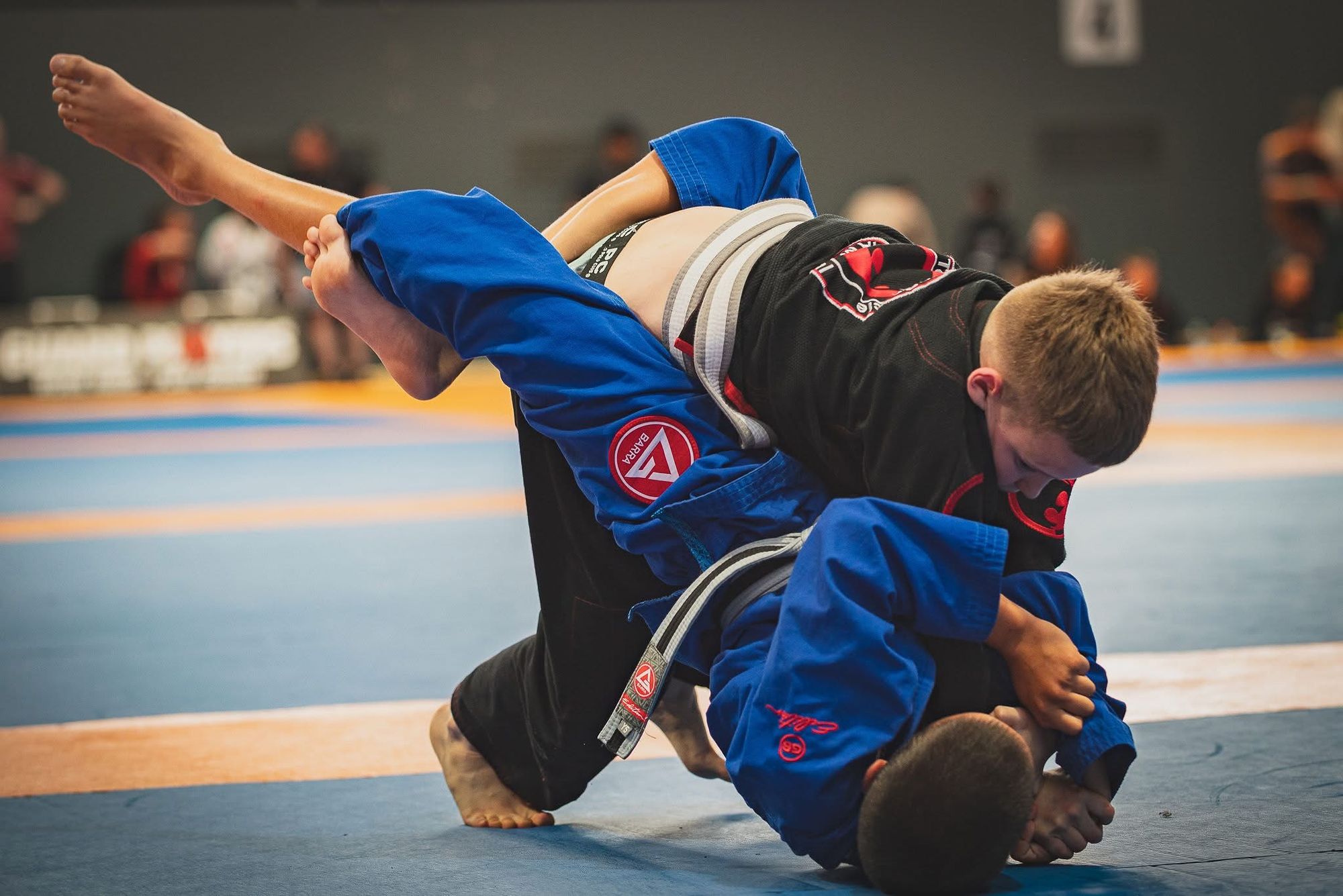
Back to School, and the Worry You Do Not Say Out Loud
The lunch boxes are packed. The new shoes are scuffed already. Somewhere between the first bell and the first homework meltdown, most parents in Laval have the same quiet thought: is my child going to be okay this year?
Not okay in the report-card sense. Okay in the way that matters more. Will they stand up straight when a bigger kid gets in their face? Will they put the tablet down without a war? Will they walk into a new class and say hello, or shrink into the back row and hope nobody notices?
You cannot follow them into the schoolyard. What you can do is give them a place where those exact muscles get trained, three times a week, by people who have done it for hundreds of children before yours. That place, for a growing number of families from Chomedey to Sainte-Rose, is a jiu-jitsu mat.
This article is for parents who are not looking for a fighter. You are looking for a calmer, steadier, more self-controlled kid. Here is how Brazilian Jiu-Jitsu builds exactly that, and why families from every background in Laval keep arriving at the same conclusion.
The Five Pressures Laval Parents Name Most
When parents sit down with us before a first class at Gracie Laval, the reasons rarely have anything to do with martial arts. They sound like this.
"I cannot get them off the screen." Every argument in the house starts with a device. The child is restless, sleeps badly, and has forgotten what it feels like to be tired from moving.
"School is a pressure cooker." Homework, evaluations, a teacher who says your child cannot sit still or focus. You want them to succeed, and you can see the stress landing on small shoulders.
"They are shy, and it is starting to cost them." A new school, a new language, a new neighbourhood. Your child speaks in a whisper, avoids eye contact and would rather be invisible than be wrong.
"The fuse is short." A lost game, a sibling, a rule they disagree with, and the explosion comes before the thinking does. You are not raising an aggressive child. You are raising a child who has not yet learned where the brakes are.
"Someone at school is targeting them." The word bullying still sits heavy in every language. You have told them to tell a teacher, to walk away, to ignore it. It has not stopped, and you feel helpless.
Notice what these five have in common. None of them is about strength. All of them are about self-control, focus, confidence and calm. Those are not personality traits your child either has or lacks. They are skills, and skills can be trained.
Kids BJJ Program (Ages 3-13)
Apprentice, Junior, and Teens classes. First class free.
Explore Kids ProgramWhat a Jiu-Jitsu Class Actually Trains
Brazilian Jiu-Jitsu is a grappling art. There is no punching or kicking in a kids class. Children learn to control a partner on the ground using leverage, balance and timing, and to escape when they are controlled. That single fact changes everything about what the training does to a young mind.
Control under pressure
Every class, your child spends time in positions that are uncomfortable but safe: pinned under a partner, off balance, out of ideas. The task is never to panic and never to force. It is to breathe, think and find the technique. Do that a few hundred times between September and June and a child learns, in their body, that pressure is something you solve rather than something you flee. That is the same skill they need during a test, a disagreement or a confrontation in the corridor.
The bow, the handshake and the tap
Class opens with a bow to the mat and ends with a handshake or a fist bump for every partner. In between, when a technique works, the partner taps and the round stops immediately. Children learn to release, to win without humiliating anyone, and to lose without drama. A child who taps, resets and tries again forty times a week develops a relationship with failure that most adults never reach.
Focus you can see
Techniques are precise. A grip two centimetres off does not work. So children learn to watch a demonstration, remember a sequence, and apply it under resistance. Parents tell us the same thing every season: the child who could not sit through a worksheet in September is following four-step instructions on the mat by November, and homework starts to look different too.
Courage without aggression
The confidence jiu-jitsu produces is quiet. It comes from knowing what to do if someone grabs you, and from knowing you do not have to prove it. Bullies read body language. A child who has been in a hundred uncomfortable positions and calmly worked out of every one of them carries themselves differently, and that difference is visible across a schoolyard.
A body that is tired in the right way
Forty-five minutes of movement games, drilling and light sparring burns the energy that used to go into arguments about screens. Children sleep better, eat better and arrive at school on Tuesday morning already regulated.
The Values You Already Teach at Home, Reinforced on the Mat
Families in Laval come from everywhere: Quebec, Latin America, Brazil, China, the Maghreb, Lebanon, Haiti and a dozen other places. What strikes us most is how similar the hopes are. Respect for elders and for teachers. Humility. Discipline. The ability to protect yourself and the wisdom not to have to. A child who represents the family well.
Jiu-jitsu did not invent any of those values. It simply gives them a room where they are practised every single class, out loud, in front of peers, with a coach who models them. The bow is respect. The tap is humility. Showing up on a cold Wednesday in January is discipline. Helping a smaller partner learn the escape you already know is generosity. The belt around your child's waist is earned, never given, and every child on the mat knows the difference.
That is why this training tends to reinforce what you say at home instead of competing with it. The coach is saying the same things you are. The child hears it from a second voice, in a setting they chose and love, and it lands.
Language on the Mat
Classes at Gracie Laval are taught in French and English. Families who speak Spanish, Portuguese, Mandarin or Arabic at home follow along without difficulty, and many tell us the class became a relaxed second place for their child to practise the language of school.
Here is the part that reassures every parent: jiu-jitsu has no language barrier when it comes to attacking and defending. Every technique is demonstrated, felt and repeated. A child understands a guard pass with their hands long before they know the word for it. Instructions are short, physical and repeated the same way every class. Nobody has ever been held back on the mat by vocabulary.
What Parents Notice After Three Months
We do not promise transformations by a date. Children move at their own pace, and the quiet ones often move fastest once they decide to. But there is a pattern parents describe again and again around the three-month mark.
- The child asks to go to class instead of being taken.
- Arguments about screens get shorter, because there is somewhere better to be.
- Teachers mention improved focus before the parent has said a word about jiu-jitsu.
- Eye contact comes back. Voices get louder in a good way.
- A conflict at school gets handled, calmly, and you only hear about it afterwards.
- The first stripe on the belt goes on the fridge next to the report card.
None of that happens because a child learned to fight. It happens because a child learned, in a safe and supervised place, that they can handle hard things.
How to Start at Gracie Laval
Our kids programs run in three groups so the class fits the child: Apprentice for the youngest beginners, Junior for early school years, and Teens for the older students who are ready for more structure and light competition preparation. Adults train in their own classes, and plenty of parents end up on the mat a few months after their child.
The first class is free. There is nothing to buy and nothing to sign. Your child warms up with games, learns one simple technique, meets the coach and leaves tired and smiling. You watch the whole thing from the side of the mat.
We are at 3274 Blvd. Saint-Martin O, Suite 201, in Laval, with free parking at the door, ten minutes from Chomedey, Vimont and Fabreville and an easy drive from the North Shore and Montreal.
At What Age Can a Child Start Jiu-Jitsu?
Children start in our Apprentice group as preschoolers, once they can follow simple group instructions and enjoy movement games. Most children who begin between preschool and the early school years settle in within two or three classes. Older children and teens can start at any point in the year; there is no need to wait for a new session.
Is Jiu-Jitsu Safe for Young Children?
Kids classes at Gracie Laval contain no striking. Children learn grips, positions and escapes on padded mats under constant supervision, with partners of similar size and age. Rules are explained on the first day and repeated every class, and any technique that is not appropriate for children is simply not taught.
Will Jiu-Jitsu Make My Child More Aggressive?
The opposite is what parents report. A child who knows they can protect themselves feels no need to prove it, and the daily practice of tapping, resetting and thanking a partner builds emotional control rather than eroding it. Coaches address any rough behaviour immediately, and it is rare, because the culture of the mat does not reward it.
My Child Is Shy. Will They Cope in a Group Class?
Shy children often do best in jiu-jitsu because the training is one partner at a time, not a crowd. There is no bench and no audience. A child can be quiet and still succeed, and the confidence that follows tends to spill into school and friendships within a few months.
Do Classes Conflict With Homework and School?
Kids classes run early in the evening and on Saturday mornings, so they fit around school. Most families find that a child who has moved, focused and released stress on the mat sits down to homework more easily afterwards, not less.