 EN
 FR
 中文
 ES
 PT
 عربي
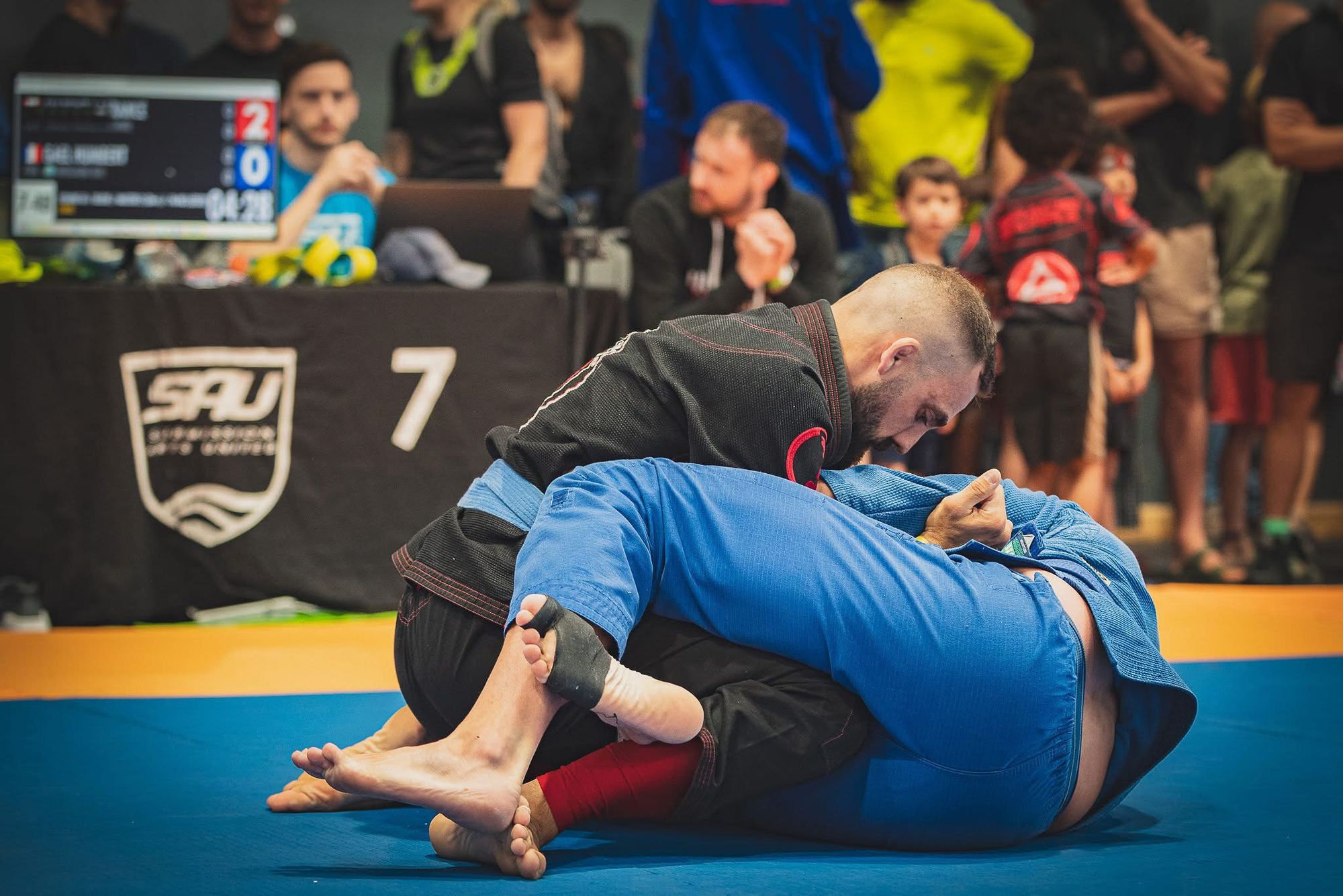
Does stepping onto a competition mat change your brain chemistry, and does it make you a better man or a better woman? The honest answer from 2026 research: competing clearly stirs your stress hormones and tests your nerves, while the evidence on character is encouraging but thin. Many of these studies come from judo, wrestling and other combat sports, and we say which one each time.
The short answer
- Hormones: on competition mornings, elite athletes' cortisol rise after waking was much bigger than on rest days, a sign the body is gearing up.[10][22][23]
- Nerves: the evidence points both ways. Among BJJ white belts, medalists reported less worry before the fight, but older judo work found winners were more worried and handled it better.[9][25]
- Character: adult beginners describe learning to face fear and to control their force for their partner's safety, and women wrestlers who added mental skills training reported more self-control.[19][21]
- Risks are real: weight cutting, poor sleep and heel-hook knee injuries, and not every gym culture builds character.[3][5][12][14]
No experience, no equipment. We can lend you a gi for the first 2 weeks.
What the studies found
| Study | Who | Sport | What they found |
|---|---|---|---|
| Jimenez and others, 2026 | 190 elite athletes, 58 women | Judo and six other sports | Much bigger cortisol rise after waking on competition days [10] |
| Bayram and others, 2026 | 20 national-level men | Boxing (not grappling) | Hormone shifts during a real bout did not match how anxious or angry they felt [18] |
| Santana and others, 2026 | 26 white belts, national event | Brazilian jiu-jitsu | Medalists: less worry, but more mental confusion. One event, small [9] |
| Peric and others, 2026 | 10 men, higher and lower belts | Brazilian jiu-jitsu | Higher belts more accurate but slower on decision tasks. Preliminary [2] |
| Giardullo and others, 2026 | 60 amateur and semi-professional athletes | Brazilian jiu-jitsu | Live-problem training: reaction time down 15%, versus 7% with traditional drilling [6] |
| Ramada and others, 2026 | 63 men | Striking versus judo, wrestling, jiu-jitsu | Professional strikers had lower processing speed and verbal memory than grapplers [17] |
| Norouzi and others, 2026 | 33 wrestlers with anxiety | Wrestling | 8-week mental programme cut anxiety. Contrary: mental toughness did not improve more than waitlist [11] |
| Tutal and others, 2026 | 36 professional women wrestlers | Wrestling | Mental skills training added to wrestling: more self-control and confidence [21] |
| Lazaro Santos and others, 2026 | 17 adult beginners, interviews | Martial arts, combat sports | Growth in facing fear and controlling force. Not automatic [19] |
| Kusnierz and others, 2026 | 277 athletes, 71 women | BJJ, karate, wrestling, MMA | Most links between emotions and aggression were small [16] |
| Izler and Acar, 2026 | 150 combat athletes, 150 non-athletes | Combat sports pooled | Contrary: athletes scored higher on antisocial and narcissistic traits [14] |
| Piekarski and others, 2026 | 758 brown and black belts, 2021 | Brazilian jiu-jitsu | Heel hooks: 26.5 knee injuries per 1,000 matches, against 2.2 without [3] |
What happens to your hormones on competition day?
Your body treats a competition as a challenge and prepares for it. In 190 elite athletes from seven sports, judo among them, the cortisol rise after waking was much bigger on competition mornings than on rest days, and the pattern looked alike across sports.[10] The study did not measure performance, and its authors note that amateurs may differ.
Older, smaller studies, which we use as background, fit this picture. Cortisol and anxiety were higher before an official judo contest than on rest days.[22] In BJJ, official matches raised cortisol more than practice matches did, and over four simulated matches in a day, adrenaline responses tapered while muscle-damage markers climbed.[23][24]
Do the hormones tell you how you feel? In national-level boxers, testosterone rose mid-bout and cortisol peaked afterwards, but neither tracked how anxious or angry the boxers felt.[18] We found no 2026 study of hormones around a real grappling match, so the BJJ evidence is older, small and mostly from men.
Does competing sharpen your thinking?
That is not proven, and the thinking evidence in grappling is thin. In a very small 2026 pilot, brown and black belts were more accurate but slower than blue and purple belts on virtual-reality decision tasks, and the authors call the pattern preliminary.[2]
A 2026 study of 60 BJJ athletes compared two ways of teaching. Training built on live, game-like problems improved explosive force and reaction speed more than traditional drilling, with reaction time down 15% against 7%.[6] It compares teaching methods, not training against no training.
A study of 63 men found professional strikers scored lower on processing speed and verbal memory than grapplers, which the authors link to repeated head impacts.[17] Grapplers were only the comparison group, so this cannot show that grappling improves thinking. A 2026 review links martial arts in later life to markers of brain health and less loneliness, but it pools Tai Chi with harder styles and has no competition data.[1]
Will competing calm your nerves or rattle them?
The two best-known results point in opposite directions. Among 26 BJJ white belts at a national event, those who medalled reported less worry before their fight, but also more mental confusion, which the authors call a confounding result.[9] At an international judo event, top-three finishers had more worry and higher cortisol in the morning, yet seemed to manage the stress better as the day went on.[25]
So calm does not simply win, and arousal is not the enemy: managing it is. In 176 young karate competitors aged 16 to 25 (karate, not grappling), higher anxiety went with more tension, fatigue and confusion and with worse sleep, measured from a week before to the day itself.[8]
Mental skills can be trained, but the trials tested a programme added to the sport. An 8-week acceptance programme lowered anxiety in anxious wrestlers, though mental toughness did not improve more than in the waitlist group.[11] Women wrestlers who added mental skills training reported more self-control and confidence than teammates who only wrestled.[21] In 470 university combat athletes, women and men, stronger mental skills went with more self-rated toughness, a survey that cannot show cause.[13]
What does a match ask of your body?
Short, hard efforts, repeated, with a body that is also managing stress. Competition raised cortisol more than practice in BJJ, and across four matches muscle-damage markers kept climbing, so rest between matches and after a tournament matters.[23][24]
For women, one 2026 study of 88 women in competitive judo found fewer and milder urinary symptoms than in 88 women in other sports, so the authors conclude judo is not a risk factor there.[4] It is judo, not BJJ. In 268 martial arts practitioners (111 women, 155 men), people reported health benefits whatever their years of training, but those benefits were perceived, not measured.[7]
Masters competitors, aged 30 and over, are part of the picture: they made up 455 of the 758 brown and black belts in a 2021 knee-injury study.[3]
Does competing make you a better man or a better woman?
No study shows that the sport makes anyone morally better. The best evidence says growth is possible, not automatic, and depends on the coach and the training partners. Seventeen adult beginners in Brazil and Spain described learning to face fear and frustration, to control their force so the partner stays safe, and to keep working under pressure, and competition sharpened all three.[19] They also described avoidance, excessive force, injury and quitting.
On aggression, most links were small. In 277 athletes aged 16 to 57, including 44 women in BJJ, a link between reframing a situation and hostility showed in wrestling and MMA but not in BJJ or karate.[16] There was no non-athlete group, so this does not show that BJJ lowers aggression.
One contrary result matters. Turkish combat athletes (striking and grappling pooled) scored higher than non-athletes on antisocial, narcissistic and Machiavellian traits, and a survey cannot tell whether the sport attracts or shapes them.[14] Character depends on the room: ask how a gym picks partners, handles intensity and treats beginners.
What does competition not do, and what does it risk?
- It is not a treatment. The anxiety and self-control trials tested a mental programme added to wrestling, not wrestling alone.[11][21]
- Weight cutting: elite Korean combat athletes (taekwondo, judo, wrestling, boxing; no BJJ), men and women analysed separately, cut about 5.5% of body mass in about a week and reported fatigue, dizziness, irritability and poor concentration.[5]
- Sleep: about two in three of 498 young combat athletes slept poorly, more often men, Olympic-sport athletes and those who cut over 4% of body weight.[12]
- Knees: at 2021 IBJJF events, brown and black belts exposed to heel hooks had 26.5 knee injuries per 1,000 matches against 2.2, a relative risk of 12.0 with a very wide margin (1.5 to 96.1).[3]
- Head and neck: head impacts are mostly a striking-sport finding.[15][17] A review suggests controlled chokes might trigger protective responses, which is only a hypothesis. US emergency data list jiu-jitsu and karate most often, but without participation numbers they give no rate.[20]
Read next
- What competing does to brain, body and character, for all ages
- Competition and children, by age group
- What the research shows for adults on fitness, stress and confidence
- The family guide to jiu-jitsu competition
- The adult guide to jiu-jitsu competition
- Upcoming competitions near Laval, updated every morning
When are classes?
| Group | Weekdays | Saturday |
|---|---|---|
| Adults (14+) | Mon to Thu, 7:15 PM | 10:45 AM |
Classes start after work, so you can train on your way home. Nobody has to compete: many adults train for years and never enter a tournament.
Ready to join? Register online.
References
We kept the 2026 studies on grappling and combat sports first, added four older studies as background, and kept the results that do not go our way. Each link opens the study's official summary in its journal or in PubMed.
- Jiang Y, Li P, Yang Y, et al. (2026). Neural mechanisms and social support for mental health in old age by martial arts exercise. Frontiers in Psychology 16:1733310. https://doi.org/10.3389/fpsyg.2025.1733310
- Peric T, Novicichin S, Rydzik L, et al. (2026). Cognitive functions and skill level in Brazilian Jiu-Jitsu: an exploratory study using virtual reality. Frontiers in Sports and Active Living 7:1738534. https://doi.org/10.3389/fspor.2025.1738534
- Piekarski M, Kreiswirth E, Barber Foss K, Jimenez ML, Myer GD, Montalvo AM (2026). Knee Injury in Competitive Brazilian Jiu Jitsu Athletes: Implications for Training. Sports Health 18(4):890-897. https://doi.org/10.1177/19417381251400303
- Saulicz A, Saulicz M, Saulicz E (2026). Assessing Lower Urinary Tract Symptoms in Women Practising Competitive Judo: Findings from a Cross-sectional Study. International Urogynecology Journal 37(6):1699-1707. https://doi.org/10.1007/s00192-026-06523-9
- Park KJ (2026). Sport- and sex-specific differences in rapid weight loss practices among elite combat sport athletes. Journal of Sports Medicine and Physical Fitness 66(7):838-846. https://doi.org/10.23736/s0022-4707.26.17620-8
- Giardullo G, Ceruso R, Di Lascio G, Taleb M, Esposito G, D'Elia F (2026). Comparison of traditional and ecological dynamical training approaches in Brazilian Jiu-Jitsu: effects on Force Development, reactivity, and distress perception. Frontiers in Psychology 17:1794709. https://doi.org/10.3389/fpsyg.2026.1794709
- Zormann E, Foramitti M, Nater UM (2026). Perceived health benefits of martial arts and combat sports. Frontiers in Psychology 17:1774069. https://doi.org/10.3389/fpsyg.2026.1774069
- Belgacem A, Salem A, Yildiz M, Ceylan HI, Ben Hassen S, Negra Y, Muntean RI, Jarraya M (2026). Impact of competitive anxiety on mood, sleep, and physical activity levels in young Tunisian karate athletes: a multidimensional prospective observational study. Medicine (Baltimore) 105(18). https://doi.org/10.1097/MD.0000000000048435
- Santana MVM, Aidar FJ, Mendez-DelCanto R, et al. (2026). Pre-Competition Anxiety and Mood State in White-Belt Brazilian Jiu-Jitsu Athletes: An Exploratory Comparison Between Medalists and Non-Medalists. Sports (Basel) 14(6):216. https://doi.org/10.3390/sports14060216
- Jimenez M, Lopez-Lluch G, Baron-Lopez FJ, et al. (2026). The cortisol awakening response (CAR) of elite athletes is elevated before a competition, but no interaction with sport type. Psychoneuroendocrinology 190:107905. https://doi.org/10.1016/j.psyneuen.2026.107905
- Norouzi E, Shahmoradi N, Abdi M (2026). Acceptance and commitment therapy can reduce anxiety and enhance self-efficacy, mental toughness, and sleep quality in wrestlers with anxiety. Acta Psychologica 267:107045. https://doi.org/10.1016/j.actpsy.2026.107045
- Eroglu S, Ceylan T, Turkmen M, et al. (2026). Sleep quality in Olympic and non-Olympic combat sports: associations with sex, rapid weight loss, and sport age (a PSQI-based analysis). Frontiers in Psychology 17:1847782. https://doi.org/10.3389/fpsyg.2026.1847782
- Duyan M, Gunel I, Ozoglu F, et al. (2026). Mental performance skills and athletic performance in combat athletes: the mediating role of mental toughness. Frontiers in Psychology 17:1848217. https://doi.org/10.3389/fpsyg.2026.1848217
- Izler IA, Acar S (2026). Antisocial, narcissistic personality traits and symptoms of attention deficit hyperactivity disorder in combat athletes. BMC Psychology 14:1445. https://doi.org/10.1186/s40359-026-05176-z
- Bailey DM, Stacey BS, Cox K, et al. (2026). Bioenergetics of the combat sports brain: Between risk and resilience. Journal of Cerebral Blood Flow and Metabolism (271678X261473394). https://doi.org/10.1177/0271678x261473394
- Kusnierz C, Cynarski WJ, Rogowska AM (2026). The moderating effect of combat sports discipline on the relationship between emotion regulation and aggression among athletes practicing Brazilian jiu-jitsu, karate, wrestling, and mixed martial arts. BMC Sports Science, Medicine and Rehabilitation 18:490. https://doi.org/10.1186/s13102-026-01898-0
- Ramada F, Rando B, Ferreira IS, Abreu AM (2026). Cognitive impact of repetitive head blows in combat athletes: A cross-sectional comparison. Journal of Sports Sciences 44(19):2651-2663. https://doi.org/10.1080/02640414.2026.2712805
- Bayram B, Makaraci M, Pancar Z, Makaraci Y (2026). Temporal dissociation between endocrine and psychological responses across an official boxing bout in national-level male boxers. BMC Sports Science, Medicine and Rehabilitation 18:411. https://doi.org/10.1186/s13102-026-01986-1
- Lazaro Santos Y, Gutierrez-Garcia C, Barreira CRA (2026). Becoming a fighter: phenomenological dimensions of personal development in beginner martial arts and combat sports practitioners. Frontiers in Psychology 17:1910206. https://doi.org/10.3389/fpsyg.2026.1910206
- Rabon W, Tirmizi Z, Carnovale B, Lavadi RS, Mooney JH, Hamilton DK, Maroon JC, Miele VJ, Agarwal N (2026). Fighting for safety: head and spine injuries in martial arts presenting to U.S. emergency departments. Journal of Clinical Neuroscience 154. https://doi.org/10.1016/j.jocn.2026.112306
- Tutal V, Demir O, Sahin O, et al. (2026). Effects of psychological skills training on self-control, perceived physical self-defense capacity, and mental toughness in elite female wrestlers: a randomized controlled trial. Frontiers in Psychology 17:1956445. https://doi.org/10.3389/fpsyg.2026.1956445
- Salvador A, Suay F, Gonzalez-Bono E, Serrano MA (2003). Anticipatory cortisol, testosterone and psychological responses to judo competition in young men. Psychoneuroendocrinology 28(3):364-375. https://doi.org/10.1016/s0306-4530(02)00028-8
- Moreira A, Franchini E, de Freitas CG, et al. (2012). Salivary cortisol and immunoglobulin A responses to simulated and official Jiu-Jitsu matches. Journal of Strength and Conditioning Research 26(8):2185-2191. https://pubmed.ncbi.nlm.nih.gov/22027851/
- Andreato LV, Julio UF, Panissa VL, et al. (2015). Brazilian Jiu-Jitsu Simulated Competition Part I: Metabolic, Hormonal, Cellular Damage, and Heart Rate Responses. Journal of Strength and Conditioning Research 29(9):2538-2549. https://pubmed.ncbi.nlm.nih.gov/26308831/
- Papacosta E, Nassis GP, Gleeson M (2015). Salivary hormones and anxiety in winners and losers of an international judo competition. Journal of Sports Sciences 34(13):1281-1287. https://doi.org/10.1080/02640414.2015.1111521