 EN
 FR
 中文
 ES
 PT
 عربي
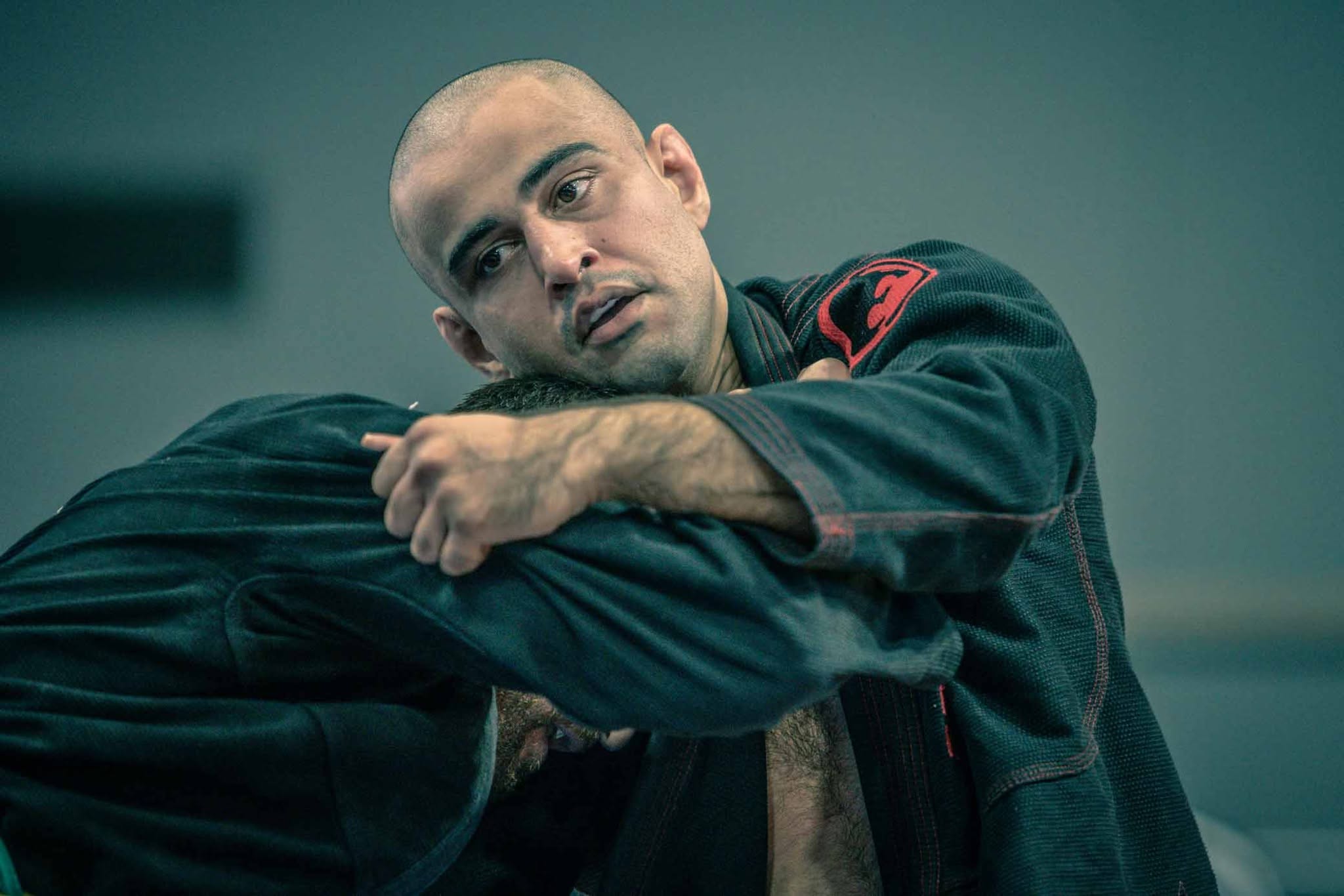
Does jiu-jitsu change your brain? A little, maybe, and the research is promising but young. In older adults, training seems to raise a protein that helps brain cells grow. In single sessions, it also raised a hormone that helps you bond with people. Almost all of this comes from judo, taekwondo and other martial arts, and the one jiu-jitsu study is tiny. We tell you the sport every time.
The short answer
- Brain growth: older adults who trained judo, taekwondo or another martial art for 12 to 16 weeks had more of a brain growth protein called BDNF.[1][3][4]
- Bonding: a hormone called oxytocin, which helps people bond, rose after hard training (Japanese jujitsu, not BJJ), and rose more after ground grappling than after punching and kicking.[7][8]
- Sparring: for judo athletes, live sparring raised that protein more than a hard fitness test, but young men who did taekwondo for 8 weeks showed no clear change.[2][5]
- Limits: a higher level of that protein in your blood is a clue, not proof of a sharper brain, and the only jiu-jitsu study had 11 athletes.[6]
No experience, no equipment. We can lend you a gi for the first 2 weeks.
What the studies found
| Study | Who | Sport | What they found |
|---|---|---|---|
| Kujach and others, 2022 | 40 older adults, 12 weeks, with a comparison group | Judo | BDNF up; faster on a focus test; stronger legs and better balance [1] |
| Schor and others, 2019 | 56 national-team athletes, men and women | Judo (live sparring) | BDNF rose more after sparring than after a hard fitness test [2] |
| Hola and others, 2024 | 77 adults, average age 70, randomized | "Martial arts" (style not named), compared with dance | BDNF up in both; dance did more for memory and mood [3] |
| Cho and Roh, 2019 | 37 women aged 65 and over, randomized, 16 weeks | Taekwondo | Strength, BDNF and other growth factors up; better attention-test score [4] |
| Kim, 2015 | 14 young men, 8 weeks | Taekwondo | Contrary: BDNF did not change significantly; the focus test improved [5] |
| Stacey and others, 2021 | 11 elite athletes and 11 matched controls | Brazilian jiu-jitsu | More blood flow to the brain at rest; normal thinking scores. One moment in time, so no cause shown [6] |
| Rassovsky and others, 2019 | 68 beginner and advanced practitioners, lab study | Japanese jujitsu (includes ground grappling; not BJJ) | Oxytocin rose after training, more after ground grappling than punch-kick sparring [7] |
| Harwood-Gross and others, 2020 | Young people from at-risk and regular schools; numbers not in the summary | "Martial arts" (style not named) | Oxytocin stayed raised after cool-down in at-risk youths; cortisol behaved differently by group [8] |
| Bailey and others, 2026 | Review, no new participants | Combat sports, including BJJ | An idea, not a result: brief choke-related dips in blood flow may switch on protective responses [9] |
What is BDNF, and does martial arts training raise it?
In older adults, it seems to. BDNF is a protein that helps brain cells survive and grow, a bit like fertilizer for the brain. In one study, older adults who did judo for 12 weeks ended up with more of it in their blood than people who did not train. They also got faster on a focus test, and their legs got stronger and their balance better.[1]
Another trial split older adults into dance, martial arts or a comparison group (the summary does not name the martial art). Both dance and martial arts raised it after 12 weeks, though dance did more for memory and mood.[3] So martial arts is a good option, not the only one.
Older women gained too. After 16 weeks of taekwondo, women aged 65 and over had more of the protein, more strength and a better score on an attention test.[4]
Does live sparring change the brain more than a hard workout?
Yes, at least for the protein, in one study of top judo athletes. They did a fitness test that gets harder and harder, and they also sparred live. It rose more after the sparring.[2]
That was one session, so it shows what a single class can do, not what a year of training does. On the mat, sparring makes you work hard, make quick choices and read a real person at the same time. That is what we see in class, not a study result.
Does it work the same for younger adults?
Not clearly. Young men who did taekwondo for 8 weeks had no clear change in the protein, although they did better on a focus test.[5] The group was small and the program short, so this is a limit, not a verdict.
Most of the research on this protein is in older people. These studies cannot tell you what happens to a typical adult in their 20s to 50s.
Does training raise oxytocin, the bonding hormone?
Yes, right after a hard session, and most after ground grappling. In a lab study, people who practise Japanese jujitsu (not BJJ) gave saliva samples. Their oxytocin rose after training, and rose more after ground grappling than after punching and kicking.[7] The researchers think the close, touch-based contact may be the reason.
A second study followed young people through one hard martial arts class (it did not name the style). In those from at-risk backgrounds, oxytocin was still raised after the cool-down.[8] The summary does not say how many took part, so we treat it as a hint.
Both studies looked at one session. They do not show your mood is better a month later. Jiu-jitsu is built on close contact with a partner, so a bonding hormone makes sense to us. That is our view, not a finding.
What happens to stress hormones during class?
It depends on who you are. In that same one-class study, cortisol, the main stress hormone, kept rising during class in young people from regular schools. In the at-risk group it did not react.[8]
The authors think some of the benefits of martial arts may come from hormones, and that training can affect different people in different ways.
In class, we see it as a safe place to practise staying calm while a partner holds you down. No study here tested that, so it is our view. A tournament is different, because the pressure is real. For cortisol and testosterone on competition day, read what the research says about competing.
Does jiu-jitsu change blood flow to the brain?
In one small study, yes. Eleven elite BJJ athletes, with about 8 years of training, had more blood flowing to the brain at rest than 11 matched controls. Their thinking scores were normal.[6]
The authors call it early evidence of protection. They suggest the short choke moments and the interval-style training may be the reason.
A 2026 review went further. It suggests that brief, repeated dips in blood flow from chokes might switch on the brain's protective responses, while repeated blows to the head in boxing and MMA lead to injury.[9] The review calls this a hypothesis, and that paper did not test it. So it is a question to test, not a health claim.
What does the research not show?
It does not show that a higher level of the protein makes your memory better. The level in your blood is a clue, not proof of a sharper brain, and most of the data come from older adults in small studies.
It does not show that jiu-jitsu caused the extra blood flow. Only one study used jiu-jitsu, and it compared 11 athletes at a single moment.
The hormone studies looked at single classes, not months of training. In young men the protein did not change, and dance did as well as martial arts, or better, for memory and mood.
So the brain chemistry story is promising and still young. We do not sell it as a promise.
Keep reading
Next in the seriesSharper focus at any age: attention, memory and self-controlIn the judo trial, BDNF rose and a focus test got faster too. This essay follows that thread into attention, memory and self-control. Next in the seriesStrong, steady and hard to knock over: your body after 30The taekwondo trial in older women found stronger bodies along with higher BDNF. This essay covers strength, balance and safety.Related reading
- What Competing in Jiu-Jitsu Does to Your Brain, Body and Character
- Respect on the mat: empathy, belonging and the coach
- Jiu-Jitsu for Adults: What the Research Really Shows About Fitness, Stress and Confidence
When are classes?
| Group | Weekdays | Saturday |
|---|---|---|
| Adults (14+) | Mon to Thu, 7:15 PM | 10:45 AM |
Classes are taught in French and English. We can lend you a gi for the first 2 weeks, so you can try a few classes before buying one.
Your first class is free
Pick a class, come 10 minutes early, and we can lend you a gi for the first 2 weeks.
Book a free trialReady to join? Register online.
References
We chose randomized trials and reviews first, and we kept the results that do not go our way. Each link opens the study's official summary in its journal. Studies on judo, taekwondo and martial arts in general are marked as such.
- Kujach S, Chroboczek M, Jaworska J, Sawicka A, Smaruj M, Winklewski P, Laskowski R (2022). Judo training program improves brain and muscle function and elevates the peripheral BDNF concentration among the elderly. Scientific Reports 12(1):13900. https://doi.org/10.1038/s41598-022-17719-6
- Schor B, Silva SGD, Almeida AA, Pereira CAB, Arida RM (2019). Plasma brain-derived neurotrophic factor is higher after combat training (Randori) than incremental ramp test in elite judo athletes. Brazilian Journal of Medical and Biological Research 52(4):e8154. https://doi.org/10.1590/1414-431x20198154
- Hola V, Polanska H, Jandova T, et al. (2024). The Effect of Two Somatic-Based Practices Dance and Martial Arts on Irisin, BDNF Levels and Cognitive and Physical Fitness in Older Adults: A Randomized Control Trial. Clinical Interventions in Aging 19:1829-1842. https://doi.org/10.2147/cia.s482479
- Cho SY, Roh HT (2019). Taekwondo Enhances Cognitive Function as a Result of Increased Neurotrophic Growth Factors in Elderly Women. International Journal of Environmental Research and Public Health 16(6):962. https://doi.org/10.3390/ijerph16060962
- Kim Y (2015). The effect of regular Taekwondo exercise on Brain-derived neurotrophic factor and Stroop test in undergraduate student. Journal of Exercise Nutrition and Biochemistry 19(2):73-79. https://doi.org/10.5717/jenb.2015.15060904
- Stacey BS, Campbell Z, Bailey DM (2021). Elevated cerebral perfusion and preserved cognition in elite Brazilian Jiu-Jitsu athletes: Evidence for neuroprotection. Scandinavian Journal of Medicine and Science in Sports 31(11):2115-2122. https://doi.org/10.1111/sms.14031
- Rassovsky Y, Harwood A, Zagoory-Sharon O, Feldman R (2019). Martial arts increase oxytocin production. Scientific Reports. https://doi.org/10.1038/s41598-019-49620-0
- Harwood-Gross A, Feldman R, Zagoory-Sharon O, Rassovsky Y (2020). Hormonal reactivity during martial arts practice among high-risk youths. Psychoneuroendocrinology 121:104806. https://doi.org/10.1016/j.psyneuen.2020.104806
- Bailey DM, Stacey BS, Cox K, et al. (2026). Bioenergetics of the combat sports brain: Between risk and resilience. Journal of Cerebral Blood Flow and Metabolism (article 271678X261473394). https://doi.org/10.1177/0271678x261473394